
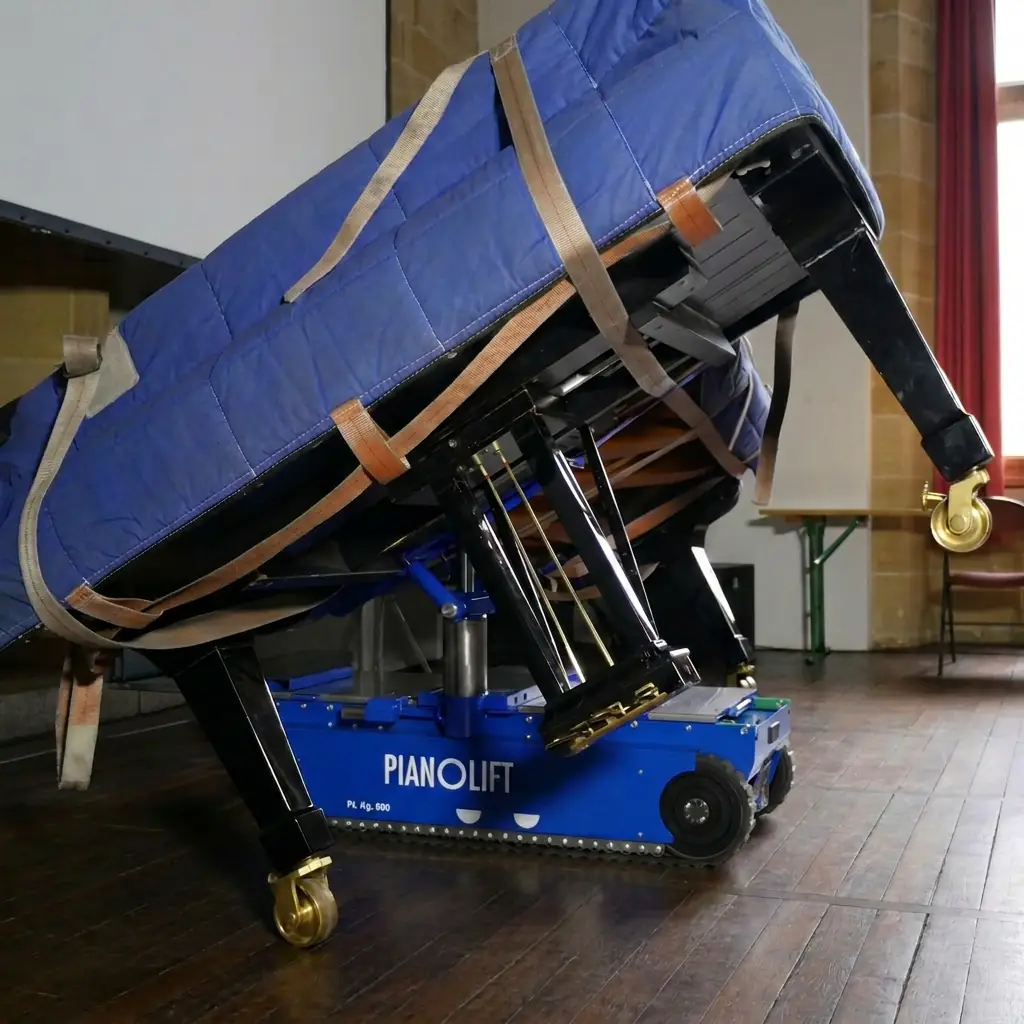
How to Move a Grand Piano (Without Wrecking It or Your Home)
Step by step on how a UK grand piano is properly dismantled, wrapped, skated, transported and reassembled by a specialist piano moving team.
Why a grand piano is different
A grand piano is not just a heavy piano. It's a piano on three legs, designed to stand on its frame in a level concert hall not to be lifted off the floor, rotated 90 degrees and pushed through a doorway. Moving one without dismantling it is how cases crack and legs snap.
Step 1: Inspection and survey
A specialist piano team arrives, photographs the instrument, checks the lid lock and the action, measures the doorways and stairs, and confirms the destination room access. Nothing is touched until the route is agreed.
Step 2: Dismantling the legs, lyre and pedals
The piano is lowered onto a padded skid board so the case sits on its straight side. The legs, the lyre (the pedal assembly) and the music desk are removed and wrapped separately. The case is wrapped in archival blankets.
Step 3: Transport on the side
A grand piano travels on its straight side on the skid board, strapped into a dedicated section of the van with no other items leaning on it. Suspension matters this is why specialist piano vans use air ride.
Step 4: Reassembly at the destination
The case is lifted from the skid board onto its legs in reverse order. Lyre and pedals reattached. Position checked. We strongly recommend a tuner 2 to 4 weeks after delivery once the instrument has settled into its new climate.
When to use a piano lift
If the destination is a first floor flat with no lift, a specialist external piano lift is used to lift the wrapped case through a window or balcony. This is not optional it's the only safe way.
Get a fixed price quote from Dimond Movers LTD
Premium, fully insured, locally based in Oxfordshire. Free written quotes, no surprise charges.